Why Mom Guilt Is a Liar (And How to Shut It Up)
Hey mama,
Let me guess what’s running through your head right now:
“I should be more patient.”
“I’m not doing enough for my kids.”
“Other moms handle this better.”
“I’m screwing them up.”
“I should enjoy this more.”
“I’m failing them.”
That voice? That’s mom guilt. And it’s a liar.
As a behavior analyst and mom of four (including twins!), I’ve spent years studying guilt - both professionally and personally. And here’s what I’ve learned: Mom guilt isn’t telling you the truth about your parenting. It’s telling you something else entirely.
Today, I’m going to show you why mom guilt is lying to you, what it’s actually trying to tell you, and how to shut it up so you can parent from a place of clarity instead of constant self-criticism.
What Mom Guilt Actually Is (Hint: It’s Not About Your Kids)
Before we can shut it up, we need to understand what it is.
Mom Guilt Isn’t:
• An accurate assessment of your parenting
• A sign you’re doing something wrong
• Evidence that you’re failing your kids
• A helpful motivator for change
• Your intuition telling you the truth
Mom Guilt Is:
• The gap between impossible standards and reality
• Internalized cultural messages about “good motherhood”
• A symptom of carrying too much without support
• A distraction from systemic problems
• A tool of control that keeps mothers compliant
The key insight: Mom guilt almost never reflects the actual quality of your parenting. It reflects the impossible standards you’re trying to meet.
What This Looks Like:
“I felt crushing guilt because I served chicken nuggets for dinner three nights in a row. But my kids were fed, happy, and healthy. The guilt wasn’t about my kids’ wellbeing - it was about not meeting some imaginary standard of ‘good mother’ who makes homemade meals every night.”
The 7 Lies Mom Guilt Tells You
Let’s break down the specific lies and why they’re false.
Lie #1: “You’re Not Doing Enough”
What Guilt Says:
“You should be doing more activities with your kids. You should be more engaged. You should be creating more memories. You’re not doing enough.”
Why It’s a Lie:
The truth: You’re doing an enormous amount that you’re not giving yourself credit for because it’s invisible.
When my coaching clients track what they actually do in a day, they’re shocked:
• 30+ decisions made for/about kids
• 15+ meals/snacks prepared
• 8+ conflicts mediated
• 5+ emotional regulation moments for kids
• Constant presence, safety, and love
• Invisible emotional labor
• Mental load management
But guilt focuses on: The Pinterest craft you didn’t do.
The Reality Check:
Your kids don’t need constant entertainment and activities. They need:
• Consistent presence (not perfect presence)
• Basic needs met (food, safety, love)
• Repair after conflict (not absence of conflict)
• Good-enough parenting (not perfect parenting)
The Reframe:
“I’m doing an enormous amount every single day. The fact that I’m not doing everything doesn’t mean I’m not doing enough.”
Lie #2: “Other Moms Are Doing Better”
What Guilt Says:
“She manages three kids and a business. She makes homemade meals and her house is always clean. She’s so patient and present. Why can’t you be more like her?”
Why It’s a Lie:
The truth: You’re comparing your behind-the-scenes to everyone else’s highlight reel.
What you don’t see:
• The help they have (nanny, family support, cleaning service)
• The struggles they hide (rage, overwhelm, medication)
• The curated performance for social media
• The resources they have that you don’t
• The parts of their life that are falling apart
The Research Shows:
Over 90% of mothers report feeling overwhelmed, inadequate, and guilty. That “perfect mom” you’re comparing yourself to? She probably feels the same way about someone else.
The Reality Check:
Even if someone IS doing “better” in one area, you have no idea:
• What they’re sacrificing to do it
• What support they have
• What their circumstances are
• What they’re struggling with that you don’t see
The Reframe:
“I don’t know the full picture of anyone else’s life. Comparing my reality to their appearance is pointless and harmful.”
Lie #3: “If You Were a Good Mother, You Would…”
What Guilt Says:
“If you were a good mother, you would never lose your temper. You would always be patient. You would love every moment. You would be naturally nurturing and calm.”
Why It’s a Lie:
The truth: “Good mothers” is a mythical standard that doesn’t exist in reality.
Good mothers:
• Get angry and lose their temper sometimes
• Find motherhood hard and overwhelming
• Don’t love every moment
• Have bad days and make mistakes
• Need breaks and support
• Are human beings with limits
The Research Shows:
Children don’t need perfect mothers. They need “good enough” mothers who:
• Show up consistently (not perfectly)
• Repair after mistakes (not avoid mistakes)
• Provide love and safety (not constant happiness)
• Model being human (not performing perfection)
The Reality Check:
The “if you were a good mother” voice is based on:
• Impossible cultural standards
• Patriarchal expectations of maternal sacrifice
• Marketing that profits from maternal inadequacy
• Comparison to unrealistic ideals
NOT on what children actually need.
The Reframe:
“Good mothers are human mothers who keep trying. That’s me.”

Lie #4: “You’re Damaging Your Children”
What Guilt Says:
“You yelled at them. You let them watch too much TV. You’re not reading to them enough. You’re giving them trauma. You’re screwing them up for life.”
Why It’s a Lie:
The truth: Normal parenting struggles don’t create lasting damage when repair happens.
What Actually Damages Children:
• Chronic, unrepaired conflict
• Abuse or severe neglect
• Lack of repair after mistakes
• Parents who never take responsibility
• Unsafe or chaotic environments
What Doesn’t Damage Children:
• Parents who lose their temper sometimes and apologize
• Screen time in moderation
• Missing some bedtime stories
• Imperfect parenting choices
• Human moments of frustration
The Research Shows:
Resilience research tells us that children benefit from:
• Seeing parents make mistakes and repair
• Learning that relationships withstand conflict
• Watching adults handle imperfection with grace
• Understanding that humans have limits
Your imperfect parenting isn’t damaging them - it’s teaching them.
The Reality Check:
One client was tormented by guilt over yelling at her kids. But she always apologized, reconnected, and tried to do better. Her kids were learning:
• Mistakes happen
• People can repair relationships
• Taking responsibility matters
• Mom is human and that’s okay
The Reframe:
“My kids need me to be human and repair, not perfect and unattainable.”
Lie #5: “You Should Be Enjoying This More”
What Guilt Says:
“These are precious years. You should be savoring every moment. Stop complaining and be grateful. Why aren’t you happier?”
Why It’s a Lie:
The truth: Motherhood is complex, difficult, and often overwhelming. Not loving every moment doesn’t mean you don’t love your kids.
The Reality:
• You can love your children AND find motherhood hard
• You can be grateful AND be overwhelmed
• You can cherish moments AND want breaks
• You can value your family AND miss your old life
These aren’t contradictions - they’re the normal complexity of being human.
The “Cherish Every Moment” Lie:
This narrative serves to:
• Silence maternal struggle
• Prevent mothers from asking for help
• Make mothers feel guilty for normal human emotions
• Maintain systems that don’t support mothers
The Reality Check:
Research on maternal wellbeing shows:
• Mothers who acknowledge difficulty cope better
• Pretending everything is wonderful increases stress
• Permission to struggle improves mental health
• Authentic feelings are healthier than performed gratitude
The Reframe:
“I can love my kids deeply while also finding this stage of life really hard. Both are true.”

Lie #6: “You’re Being Selfish”
What Guilt Says:
“You’re taking time for yourself when your kids need you. You’re being selfish. Good mothers don’t prioritize themselves. Your needs don’t matter as much as theirs.”
Why It’s a Lie:
The truth: Taking care of yourself isn’t selfish - it’s essential for being able to care for others.
The Airplane Oxygen Mask Principle:
You can’t help anyone if you’re unconscious. Meeting your own needs isn’t selfish - it’s what allows you to have capacity to meet others’ needs.
What Happens When You Don’t “Be Selfish”:
• Your capacity depletes
• You become irritable and reactive
• You have less patience and presence
• You’re more likely to rage and snap
• Your kids get a depleted, resentful version of you
What Happens When You Do “Be Selfish”:
• You restore your capacity
• You have more patience and presence
• You’re more emotionally regulated
• You can actually enjoy your kids
• Your kids get a regulated, present version of you
Which is actually better for your children?
The Reality Check:
Your kids benefit when you:
• Take breaks and restore yourself
• Meet your basic needs
• Set boundaries
• Model self-care and self-advocacy
• Show them that adults have needs too
The Reframe:
“Meeting my needs isn’t selfish - it’s how I maintain my capacity to care for my family.”
Lie #7: “You Should Be Able to Do This Without Complaining”
What Guilt Says:
“Other people have it harder. Stop complaining. Be grateful. Millions of women would love to have your problems. You chose this.”
Why It’s a Lie:
The truth: Your struggle is valid regardless of whether someone else has it “worse.”
The Comparison Trap:
• Someone always has it harder
• That doesn’t invalidate your experience
• Your pain is real even if others’ pain is also real
• Suffering isn’t a competition
The “You Chose This” Lie:
• You chose to have children
• You didn’t choose to do it without support
• You didn’t choose a culture that doesn’t value mothers
• You didn’t choose to carry the entire mental load
• You didn’t choose impossible standards
What you’re struggling with isn’t motherhood - it’s motherhood in a system that doesn’t support mothers.
The Reality Check:
• You can be grateful for your children AND struggle with the conditions of motherhood
• Acknowledging difficulty isn’t complaining - it’s being honest
• Your struggle deserves recognition and support
• Silencing yourself doesn’t help anyone
The Reframe:
“My struggle is valid. I can acknowledge difficulty while still loving my family.”
What Mom Guilt Is Actually Telling You
When you strip away the lies, guilt often has legitimate information underneath.
Guilt Often Signals:
Gap Between Values and Reality:
• You value patience but you’re snapping frequently
• Real issue: You’re depleted and need support, not more willpower
Unmet Needs:
• You feel guilty taking breaks
• Real issue: Your needs aren’t being met and that’s unsustainable
Impossible Standards:
• You feel guilty about imperfect parenting
• Real issue: Your standards are unrealistic and need adjusting
Lack of Support:
• You feel guilty you can’t do it all
• Real issue: You’re trying to do the work of a village alone
Systemic Problems:
• You feel guilty about work-life balance
• Real issue: Systems don’t support working mothers
The Key:
Guilt is information about a problem. But the problem is rarely your parenting - it’s usually your circumstances, support, or standards.
How to Actually Shut Up Mom Guilt
Now that you understand what guilt is and what it’s lying about, here’s how to quiet it.
Strategy #1: Name It and Challenge It
When guilt shows up:
Step 1: Name it
“That’s mom guilt talking.”
Step 2: Identify the lie
“It’s telling me I’m not doing enough.”
Step 3: Challenge with evidence
“I made 47 decisions today, fed everyone three times, mediated six conflicts, and kept tiny humans alive. I AM doing enough.”
Step 4: Reframe
“The fact that I’m not doing everything doesn’t mean I’m not doing enough.”
The Practice:
Write this down. Literally. When guilt shows up, write:
• The guilt message
• Which lie it is
• The actual evidence
• The reframe
Why this works: Externalizing it helps you see the guilt as separate from truth.
Strategy #2: Ask “Whose Voice Is This?”
When guilt speaks, ask:
• Is this MY value or someone else’s?
• Where did I learn this “should”?
• Who benefits from me feeling guilty?
• Would I say this to a friend?
Often you’ll discover:
• It’s your mother’s voice
• It’s cultural messaging
• It’s social media comparison
• It’s internalized impossible standards
Once you identify whose voice it is, you can reject it.
The Practice:
“That’s not my voice - that’s [source]. I don’t have to listen to it.”
Strategy #3: The “Good Enough” Standard
Replace perfectionism with “good enough”:
Ask yourself:
• Are my kids’ basic needs being met? (Yes)
• Am I showing up and trying? (Yes)
• Do my kids know they’re loved? (Yes)
• Am I repairing when I mess up? (Yes)
If yes to those questions, you ARE good enough.
The Practice:
When guilt says “you should be doing more,” ask:
“Am I meeting the ‘good enough’ standard?”
If yes, the guilt is about impossible standards, not actual inadequacy.
Strategy #4: Reality Test the Guilt
Ask specific questions:
“In 10 years, will this matter?”
• Guilt says: “You let them watch too much TV today”
• Reality test: Will this matter in 10 years? No.
“Is this harming my child or just violating an arbitrary standard?”
• Guilt says: “You didn’t make a homemade meal”
• Reality test: Are they fed and safe? Yes. Then it’s arbitrary standards.
“Would I judge a friend for this?”
• Guilt says: “You lost your temper”
• Reality test: If my friend told me this, would I think she’s a bad mother? No.
The Practice:
Put guilt through these reality tests. Most guilt doesn’t survive them.
Strategy #5: Redirect to What’s Actually Wrong
When guilt shows up, ask:
“What’s the real problem here?”
Guilt says: “You’re not patient enough”
Real problem: You’re depleted and need more support
Guilt says: “You’re not doing enough activities”
Real problem: You’re comparing yourself to unrealistic standards
Guilt says: “You shouldn’t need breaks”
Real problem: You’re trying to do this without adequate support
The Practice:
Address the real problem instead of trying to fix the guilt.
Strategy #6: Practice Self-Compassion
When guilt attacks, respond with compassion:
Instead of: “I’m a terrible mother”
Try: “I’m a human being doing my best in difficult circumstances”
Instead of: “I should be better at this”
Try: “I’m learning and growing, and that’s enough”
Instead of: “Other mothers handle this better”
Try: “I don’t know their full story, and comparison doesn’t serve me”
The Self-Compassion Framework:
• Acknowledge the struggle (this is hard)
• Normalize the experience (all mothers struggle)
• Offer yourself kindness (I’m doing my best)
The Practice:
Talk to yourself the way you’d talk to a struggling friend.
Strategy #7: Set Boundaries with Guilt
Guilt doesn’t get to make decisions.
When guilt says: “You shouldn’t take a break”
You say: “I hear you, but I’m taking a break anyway”
When guilt says: “You’re being selfish”
You say: “I’m meeting my needs so I can care for my family”
When guilt says: “You’re not doing enough”
You say: “I’m doing what I can with what I have”
The Practice:
Acknowledge guilt exists, then do what you need to do anyway.
You don’t have to make guilt go away to act despite it.
When Guilt Becomes Problematic
Sometimes guilt crosses into territory that needs professional support.
Seek Help If:
• Guilt is constant and overwhelming
• You can’t function because of guilt
• Guilt is triggering depression or anxiety
• You’re having intrusive thoughts about being a bad mother
• Guilt is affecting your relationship with your kids
• You’re experiencing symptoms of postpartum depression or anxiety
Please reach out to a therapist who specializes in maternal mental health.
What Coaching Provides:
For mothers who need:
• Help identifying and challenging specific guilt patterns
• Accountability for practicing self-compassion
• Support addressing the root causes guilt is pointing to
• Daily access when guilt is overwhelming
• Strategies for guilt that’s connected to rage and overwhelm
Try 24 hours of FREE coaching to experience what it’s like to have support challenging guilt with you.
Mom guilt is a liar.
It’s not telling you the truth about your parenting. It’s telling you about:
• Impossible standards you’re trying to meet
• Lack of support you’re trying to compensate for
• Cultural messages you’ve internalized
• Comparison to unrealistic ideals
• Systems that don’t support mothers
Your guilt isn’t evidence of failure. It’s evidence of trying to do an impossible job without adequate support.
And mama? The fact that you feel guilty actually proves you’re a good mother. Bad mothers don’t worry about whether they’re good enough.
So the next time guilt shows up telling you you’re not enough, remember:
You are enough.
You’ve always been enough.
The guilt is lying.
And you have permission to tell it to shut up.
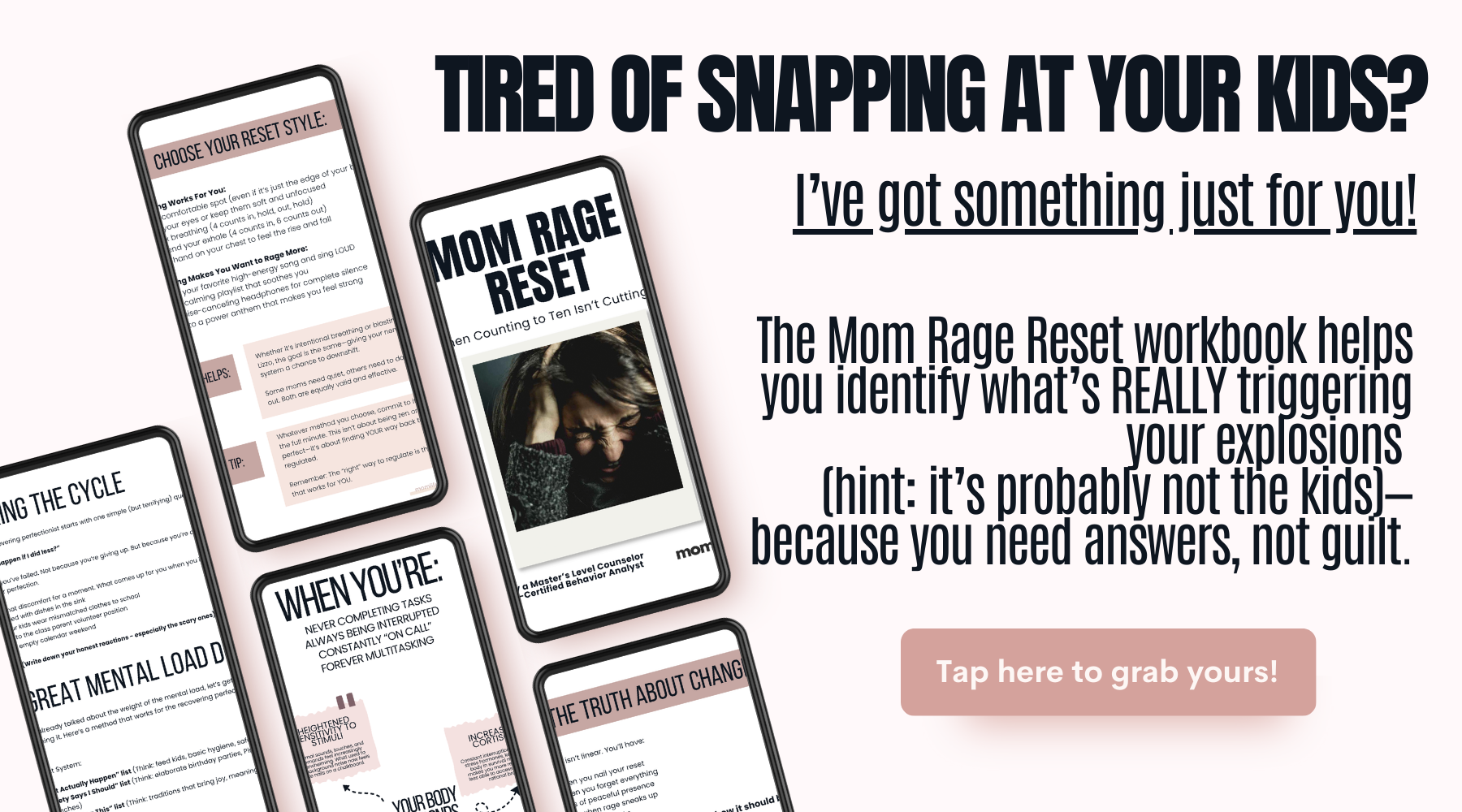
Struggling with mom guilt that’s fueling your rage and overwhelm? The Mom Rage Reset workbook helps you identify guilt patterns, challenge impossible standards, and develop self-compassion practices that actually work. Get instant access for $37.
GET THE MOM RAGE RESET WORKBOOK - $37
Need more personalized support? Try 24 hours of FREE coaching and experience what it’s like to have expert guidance tailored to your specific situation.
Try 24 hours of FREE coaching with me - because you don’t have to figure this out alone.
Let’s talk about REAL Motherhood
Discover how we can work together to make decision-making feel less overwhelming.








Follow me on Social @mom_reset_coach