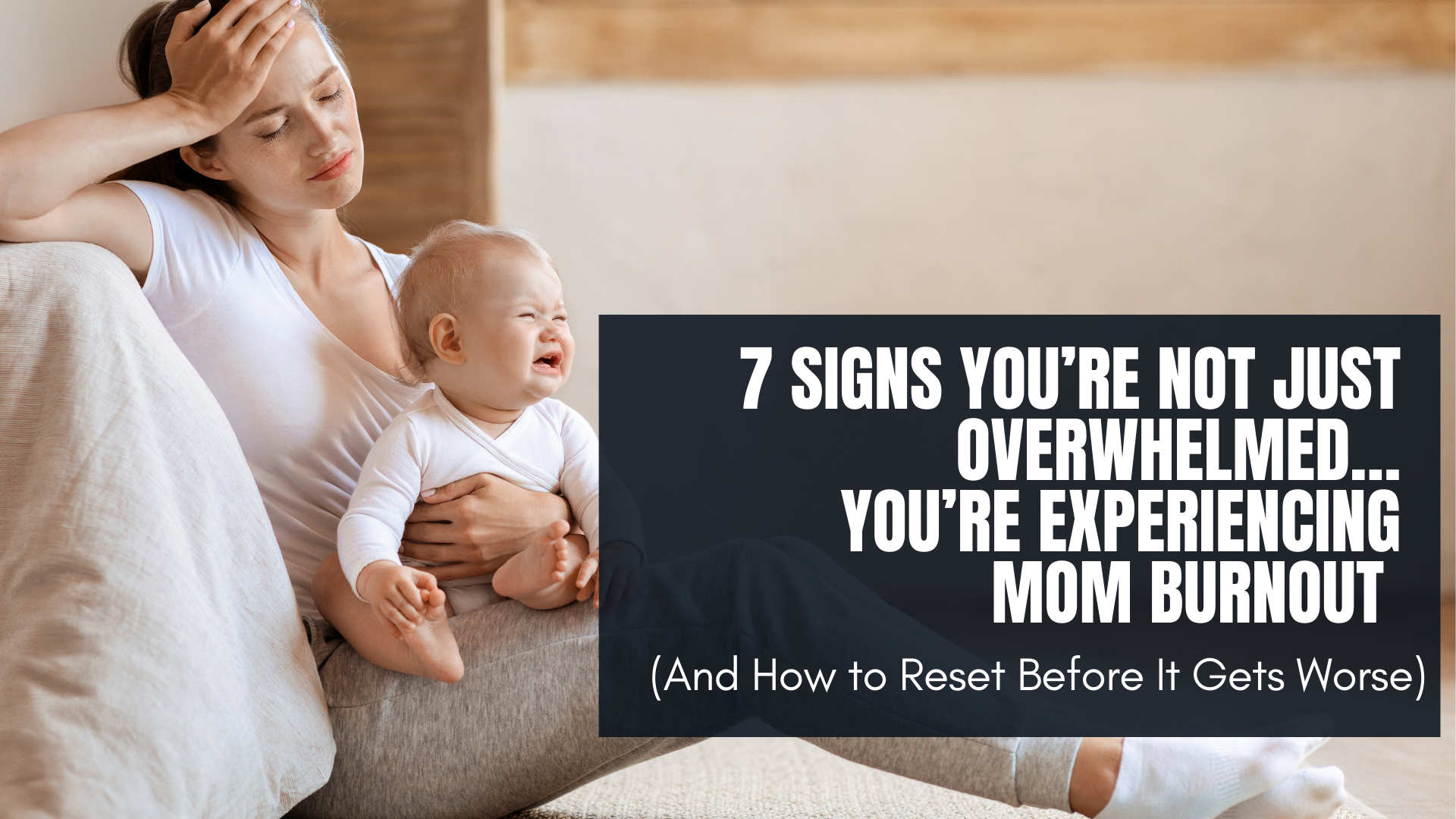
7 Signs You’re Not Just Overwhelmed…You’re Experiencing Mom Burnout (And How to Reset Before It Gets Worse)
Hey mama,
Let me ask you something: How many times this week have you told someone “I’m fine, just tired” when you’re actually feeling like you’re barely holding it together?
Here’s the thing - there’s a massive difference between having an overwhelming week and experiencing actual mom burnout. And knowing the difference? It could be the key to getting help before you completely fall apart.
As a behavior analyst and mom of four (including twins!), I’ve been on both sides of this. I’ve had overwhelming weeks where I knew I’d bounce back once things calmed down. And I’ve experienced full-blown burnout where I was lying on my apartment floor with a newborn, staring at the ceiling, feeling like a shell of the person I used to be.
Today, I’m going to help you understand the difference between normal overwhelm and actual burnout - because if you’re experiencing burnout and treating it like it’s just “a busy season,” you’re going to keep getting worse instead of better.
The Difference Between Overwhelm and Burnout
Normal Overwhelm:
• You’re stressed but can still find moments of joy
• Rest helps - you feel better after a good night’s sleep
• You’re tired but still feel like yourself
• You can see the light at the end of the tunnel
• You have bad days but also some okay days
Mom Burnout:
• You feel emotionally numb or constantly on edge
• Rest doesn’t help - you wake up still exhausted
• You don’t recognize yourself anymore
• You can’t imagine feeling better
• Every day feels impossibly hard
If you’re reading this and thinking “Oh no, that second list sounds like me,” keep reading. Because recognizing burnout is the first step to recovery.
Sign #1: You Feel Emotionally Numb or Detached
What This Actually Looks Like:
• Going through the motions of motherhood but not really feeling present
• Your kids do something cute and you feel… nothing
• You’re physically there but mentally checked out
• You catch yourself staring into space multiple times a day
• You feel like you’re watching your life happen rather than living it
Why This Is Burnout, Not Just Overwhelm:
When you’re overwhelmed, you still feel things - maybe too much. But burnout creates emotional exhaustion so severe that your brain essentially shuts down your emotional responses to protect you.
What This Feels Like:
One of my clients described it perfectly: “I feel like I’m a robot going through the motions. My daughter showed me her artwork and I said ‘that’s nice’ but I didn’t actually feel anything. I used to light up at stuff like that. Now I’m just… flat.”
The Science Behind It:
This is called emotional exhaustion or depersonalization. Your nervous system is so overwhelmed that it’s essentially numbing you out as a protective mechanism. It’s your brain’s way of saying “we can’t handle any more input right now.”
This one hit me hard when I first realized it. Much of what we call “mom guilt” is actually grief - grief for the mother we thought we’d be, the childhood we wanted to give our kids, or the life we had before.

Sign #2: Small Things Trigger Disproportionate Reactions
What This Actually Looks Like:
• Your kid spills milk and you completely lose it
• Someone asks you a simple question and you snap
• Minor inconveniences feel like catastrophes
• You find yourself yelling over things that normally wouldn’t bother you
• You cry over seemingly nothing
Why This Is Burnout, Not Just Overwhelm:
When you’re just overwhelmed, you can usually maintain some perspective. But burnout depletes your emotional regulation capacity so severely that you have no buffer left for even small stressors.
What This Feels Like:
“My son asked me what was for dinner - a totally normal question - and I just started crying. Not because of the question, but because I had absolutely nothing left to give. That one small question felt like someone asking me to climb Mount Everest.”
The Science Behind It:
Think of your stress capacity like a cup. When you’re overwhelmed, your cup is full but manageable. When you’re burned out, your cup has been overflowing for so long that even one more drop causes a complete overflow.
Related Reading - Decision Fatigue: When Even Choosing What’s for Dinner Feels Like Too Much
Sign #3: You Can’t Remember the Last Time You Felt Like Yourself
What This Actually Looks Like:
• Looking at old photos and not recognizing the person you used to be
• Friends or family saying “you don’t seem like yourself”
• Forgetting what you used to enjoy or care about
• Feeling like motherhood has completely consumed your identity
• Not knowing who you are outside of being “mom”
Why This Is Burnout, Not Just Overwhelm:
Overwhelm is temporary and doesn’t fundamentally change who you are. Burnout involves a deep identity crisis where you’ve lost touch with yourself completely.
What This Feels Like:
“I was scrolling through old photos and saw pictures of me laughing with friends, going to concerts, looking excited about life. I literally couldn’t remember what that felt like. It was like looking at a stranger.”
The Science Behind It:
Chronic stress and burnout actually change your brain structure, particularly in areas related to your sense of self. When you’re constantly in survival mode, there’s no mental space left for the parts of you that aren’t essential to immediate survival.
Sign #4: Rest Doesn’t Actually Help Anymore
What This Actually Looks Like:
• Waking up tired even after a full night’s sleep
• Taking breaks but still feeling exhausted
• Getting away for a weekend and feeling just as drained when you return
• Sleep feeling more like unconsciousness than rest
• Feeling tired in your bones, not just physically
Why This Is Burnout, Not Just Overwhelm:
When you’re overwhelmed, rest restores you. When you’re burned out, you’re so depleted that regular rest can’t touch the level of exhaustion you’re experiencing.
What This Feels Like:
“I went away for a whole weekend - no kids, just sleep and relaxation. I came back and felt exactly the same. That’s when I knew something was really wrong. I wasn’t just tired. I was depleted at a level that a weekend couldn’t fix.”
The Science Behind It:
Burnout involves physiological changes including dysregulated cortisol levels, disrupted sleep architecture, and nervous system dysfunction. Your body is stuck in a chronic stress state that simple rest can’t resolve.

Sign #5: You’re Experiencing Physical Symptoms That Won’t Go Away
What This Actually Looks Like:
• Constant tension headaches or migraines
• Digestive issues that appeared out of nowhere
• Getting sick more frequently
• Unexplained aches and pains
• Changes in appetite or weight
• Heart palpitations or chest tightness
Why This Is Burnout, Not Just Overwhelm:
Your body is screaming for help. When emotional signals don’t get your attention, your body escalates to physical symptoms.
What This Feels Like:
“I kept getting these tension headaches that wouldn’t go away. My doctor ran tests - everything came back normal. Finally she asked about my stress levels and I just broke down crying in her office.”
The Science Behind It:
Chronic stress affects every system in your body - immune function, digestion, cardiovascular health, hormone regulation. These aren’t “just stress” - they’re real physical consequences of burnout.
Sign #6: You’re Avoiding Things and People You Used to Enjoy
What This Actually Looks Like:
• Canceling plans with friends repeatedly
• Avoiding phone calls from family
• Turning down invitations you would have said yes to before
• Feeling relief when plans get canceled
• Isolating yourself more and more
• Scrolling on your phone instead of engaging with life
Why This Is Burnout, Not Just Overwhelm:
When you’re overwhelmed, you still want connection but might not have time. When you’re burned out, you actively avoid connection because you have nothing left to give.
What This Feels Like:
“My best friend texted to see if I wanted to grab coffee and my immediate reaction was dread. Not because I don’t love her, but because the thought of having to show up and be ‘on’ for anyone felt impossible.”
The Science Behind It:
Burnout creates what’s called “blocked care” - your capacity to connect with others becomes blocked because you’re so depleted. It’s not that you don’t care; it’s that your system is protecting itself by shutting down.
Sign #7: You’re Having Scary Thoughts About Escaping
What This Actually Looks Like:
• Fantasizing about running away from your life
• Thoughts like “what if I just didn’t come home?”
• Imagining what it would be like if you weren’t here
• Feeling trapped with no way out
• Thinking “I can’t do this anymore” regularly
Why This Is Burnout, Not Just Overwhelm:
These thoughts indicate that your stress has reached a critical level. This is your brain’s way of desperately searching for relief.
What This Feels Like:
“I’d be driving home from work and find myself thinking ‘what if I just kept driving?’ Not because I wanted to leave my family, but because I was so desperate for relief from the constant pressure.”
Important Note:
If you’re having thoughts of harming yourself or others, please reach out for professional help immediately. Call 988 (Suicide & Crisis Lifeline) or go to your nearest emergency room. These

How to Reset Before It Gets Worse
If you’re recognizing yourself in these signs, here’s what you need to know: burnout doesn’t get better on its own. You need to actively intervene.
Step 1: Acknowledge What’s Happening
Stop telling yourself you’re “just tired” or “just having a hard week.” Name it: “I’m experiencing burnout and I need help.”
Step 2: Get Professional Support
Consider talking to:
• Your doctor about physical symptoms
• A therapist who specializes in maternal mental health
• A coach who understands mom burnout (hi, that’s me!)
Step 3: Start Subtracting, Not Adding
Don’t try to “fix” burnout by adding self-care to your already full plate. Start by removing things:
• What can you stop doing entirely?
• What can you delegate?
• What can you do “good enough” instead of perfectly?
• What commitments can you release?
Related Reading - 6 Boundaries Every Mom Needs to Avoid Burnout
Step 4: Create Non-Negotiable Recovery Time
Even 15 minutes a day of protected time matters. This isn’t optional - it’s essential medicine for burnout.
Step 5: Address the Root Causes
Burnout isn’t just about being busy. It’s usually about:
• Lack of control over your life
• Insufficient support
• Values misalignment
• Unprocessed emotions
• Unrealistic expectations
Work on identifying and addressing these deeper issues.
Step 6: Build Your Support Network
You cannot recover from burnout alone. Find:
• Other moms who understand
• Professional support
• Practical help with daily tasks
• People who will check in on you
Step 7: Practice Radical Self-Compassion
You’re not weak for experiencing burnout. You’re human. Talk to yourself the way you’d talk to a friend going through this.
Related Reading - Qualities of a Good Mom: The Truth From a Mom Of 4 & Behavior Analyst
The Truth About Mom Burnout Recovery
Here’s what I need you to understand: recovering from burnout isn’t quick or easy. It took time to get here, and it will take time to recover.
But recovery IS possible. I’ve been there - lying on that apartment floor feeling like I’d never feel like myself again. And I did recover. Not by being perfect or doing everything right, but by:
• Acknowledging what was happening
• Getting support
• Making hard choices to protect my capacity
• Being patient with the process
• Showing myself compassion
You can recover too. But first, you have to stop pretending you’re just “a little tired” and acknowledge that you’re experiencing something more serious.
Your Burnout Is Not Your Fault
Before we end, I need you to hear this: your burnout is not evidence that you’re weak or failing. It’s evidence that you’ve been carrying too much for too long without adequate support.
You’re not broken. You’re burned out. And there’s a difference.
Burnout happens to capable, loving, dedicated mothers who are doing their absolute best in systems that don’t support them adequately.
The fact that you’re here, reading this, looking for answers? That shows incredible strength. You’re not giving up - you’re looking for a way forward.
And there is a way forward, mama. It starts with recognizing what’s really happening and giving yourself permission to get the support you need.
You deserve to feel like yourself again. You deserve support. You deserve recovery.
And it’s possible - even when it doesn’t feel like it right now.
Recognizing yourself in these signs and ready to reset before things get worse? If you’re experiencing mom burnout and need support that actually understands what you’re going through, I’m here to help., I’m here to help. Try 24 hours of FREE coaching with me - because you don’t have to figure this out alone.
Ready to start your burnout recovery?
Download my free 5-Minute Reset guide for those overwhelming moments
Consider coaching support if you’re ready to move from surviving to thriving
Let’s talk about REAL Motherhood
Discover how we can work together to make decision-making feel less overwhelming.




Follow me on Social @mom_reset_coach